

There is a point in the evening when your bedroom should begin to feel different from the rest of the house.
The kitchen may still have a few dishes in the sink. The television may be playing in another room. Your phone may still be reminding you about tomorrow. But when you step into your bedroom, it should feel like the day is finally starting to loosen its grip.
The calmest bedrooms I have toured are not always the biggest or the most expensive. Many of them are actually quite simple. The lighting is soft. The bed looks comfortable. The surfaces are clear enough to let your mind rest.
They do not demand attention. They give you permission to slow down.
That feeling is something you can create in the bedroom you already have, often without buying much or changing anything permanent.
Start With the View From the Door
Stand in your bedroom doorway and notice what catches your attention first.
Is it the bed? A pile of clothes? A crowded dresser? A television surrounded by cords? A chair that has quietly turned into a second closet?
The best bedrooms usually give your eyes one clear place to land. Most of the time, that place is the bed.
The headboard, bedding, lamps, and wall behind the bed work together to create a simple focal point. Other parts of the room remain quieter, so your attention is not being pulled in several directions at once.
You do not need to remove every personal item or make the room look like a hotel. A bedroom should still feel like yours.
Start by clearing the first thing you see when you enter. Straighten the bed, remove a few things from the nearest surface, and put away anything that makes the room feel unfinished.
That first view sets the tone for the entire space.
Turn Off the Overhead Light
Overhead lighting is helpful when you are cleaning, getting dressed, or searching for something in the back of a closet.
It is not always helpful when you are trying to slow down.
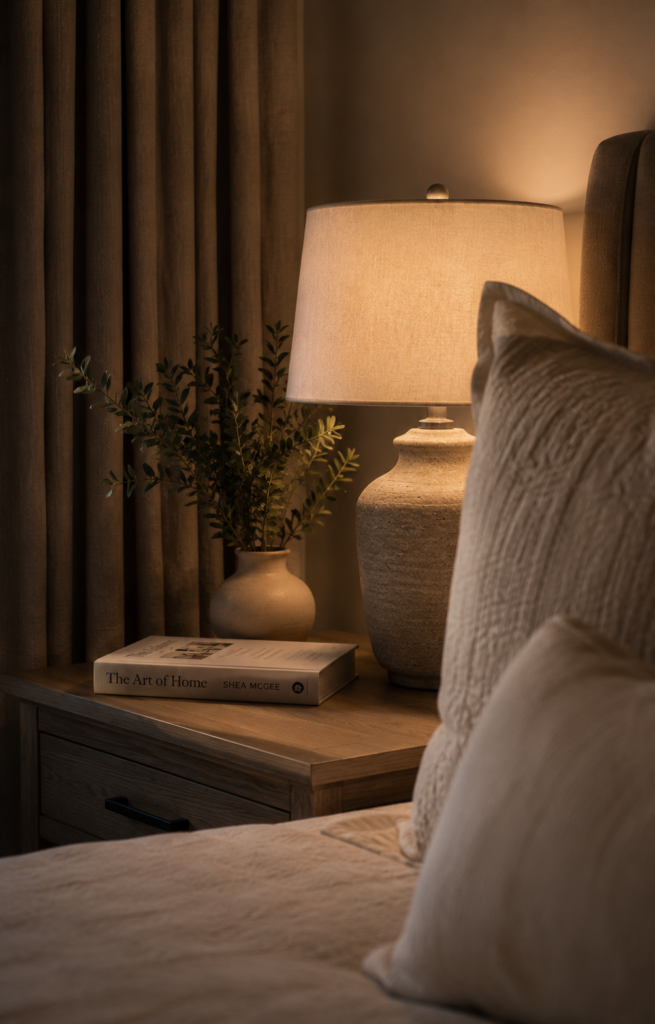
Many luxury bedrooms use several smaller sources of light instead of depending on one bright ceiling fixture. Bedside lamps, wall sconces, reading lights, and gentle light from an adjoining bathroom create layers without making the room feel dark.
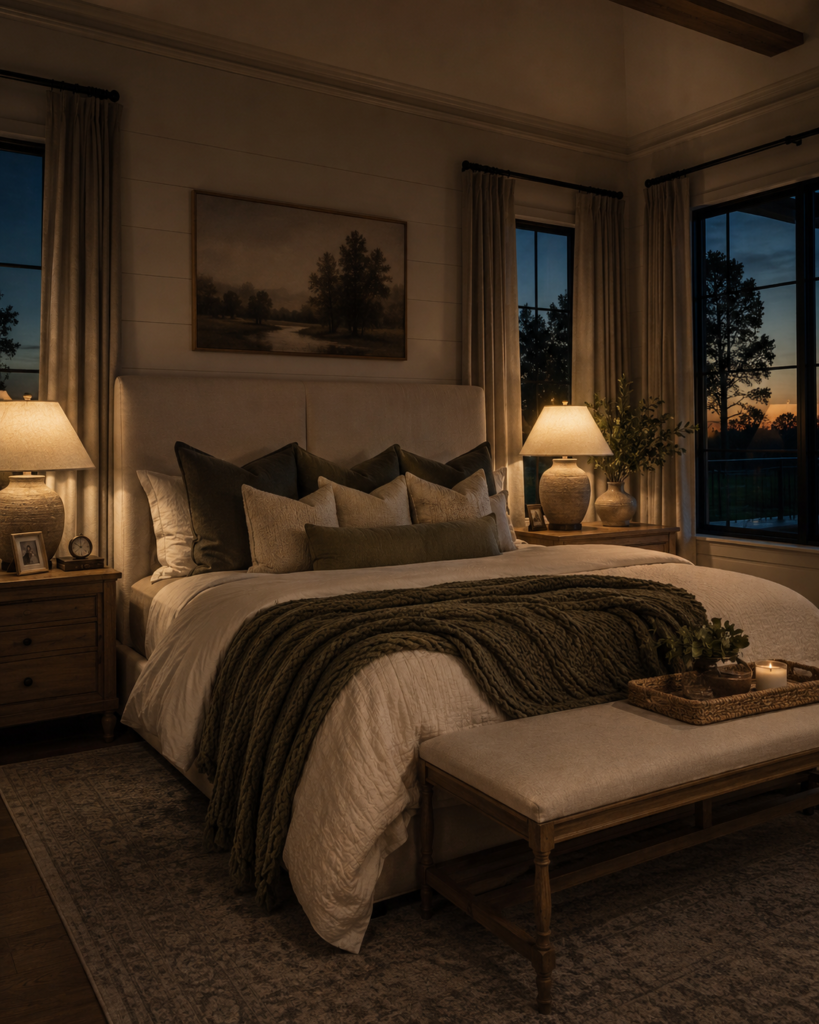
I like a room where the lighting changes as the day changes.
It can feel bright and fresh in the morning. Then, as evening arrives, the lamps come on and the room becomes softer.
Try turning off the overhead light an hour before bed. Use the bedside lamps instead. If the bulbs feel too harsh, choose a softer light that does not turn the entire room bright white.
This one change can completely shift the mood.
The room begins to tell you that the active part of the day is over.
Make the Bed Look Comfortable, Not Complicated
Some beds look beautiful in photographs but seem to require a full set of instructions before anyone can get into them.
There may be ten pillows, three folded blankets, and layers arranged so perfectly that you almost feel guilty touching anything.
I enjoy a well-styled bed, but it should still look like a place where you want to sleep.
A calm bed can be simple. Start with comfortable sheets, a quilt or comforter, your regular sleeping pillows, and perhaps one or two decorative pillows. A soft blanket folded near the bottom can add color and texture without creating more work.

Natural colors often work well in bedrooms because they are easy on the eyes. Warm white, cream, faded blue, muted green, soft gray, and light brown can all create a peaceful base.
That does not mean everything needs to be plain. You can use stripes, checks, florals, or another pattern you love.
Just allow some quieter areas around the pattern. A room feels calmer when every surface is not trying to be the most interesting part.
Clear the Space Beside the Bed
Your nightstand is one of the last things you see before going to sleep and one of the first things you see in the morning.
That makes it more important than it may seem.
You do not need to style it with a dozen decorative objects. A lamp, a book, a glass of water, and one small item you enjoy may be enough.
Chargers, remote controls, medicine bottles, receipts, and other everyday things can go in a drawer, tray, or basket.
You are not pretending those things do not exist. You are simply deciding that they do not all need to be visible while you are trying to rest.
The same idea applies to the dresser. Leaving even part of the surface open makes the entire room feel less busy.
Your eyes notice empty space, and your mind does too.
The Secret Isn’t What You See
A calm bedroom is not created by appearance alone. The lighting, bedding, furniture, and color palette all matter, but so does the atmosphere you create as the evening winds down.
Scent can become part of that atmosphere. A soft, familiar fragrance used during your evening routine can help the bedroom feel separate from the noise and activity of the day. Over time, that fragrance can become connected with quieter habits—lowering the lights, putting away your phone, reading for a few minutes, and getting ready to sleep.
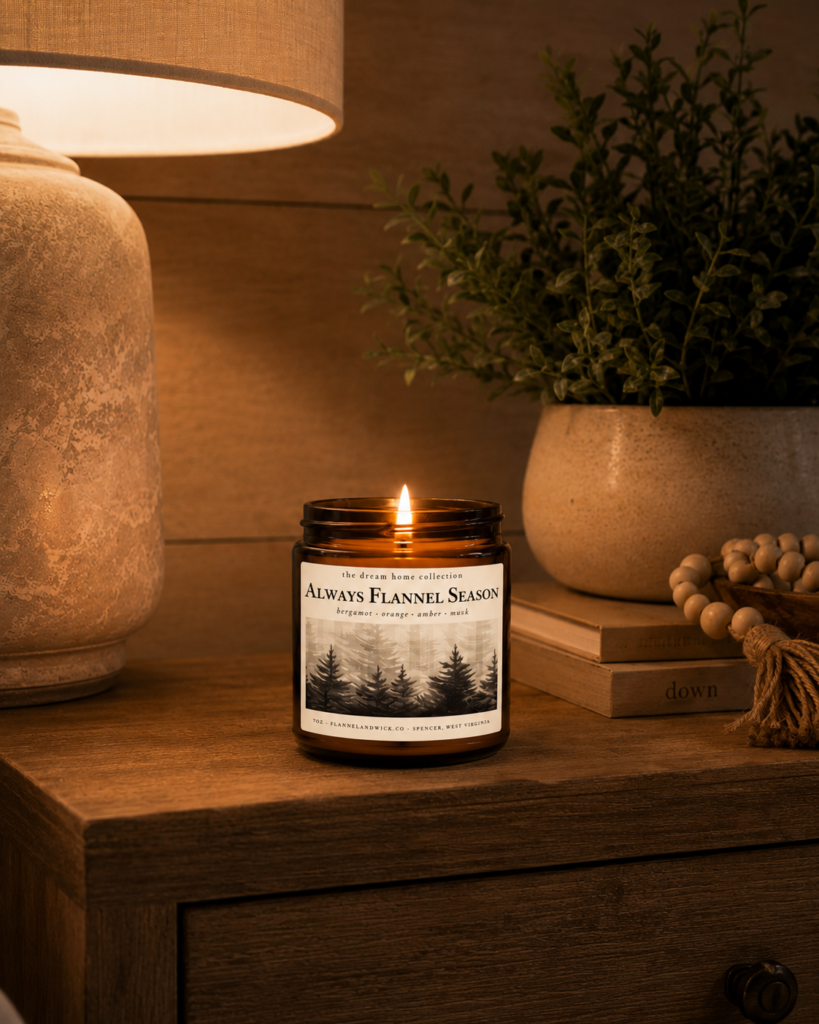
It is not meant to replace a comfortable mattress, good lighting, or a bedroom that works well. It is simply another layer, much like a soft blanket or a favorite bedside lamp. A fragrance that feels warm, clean, comforting, or familiar can make the room feel more settled and make it easier for you to settle with it.
The smallest details often make the biggest difference. Add the finishing touch with Flannel & Wick Home Fragrances.
Shop Flannel & Wick Home Fragrances
Add Softness Through Texture
Bedrooms usually feel best when soft materials lead the design.
Wood floors, glass tables, metal fixtures, and painted walls can all be beautiful. But when too many hard surfaces appear together, the room can begin to feel cold or unfinished.
A rug beneath the bed adds comfort and helps absorb some of the sound in the room. Curtains soften the windows. An upholstered headboard makes the bed feel more comfortable and gives the wall behind it a stronger presence.
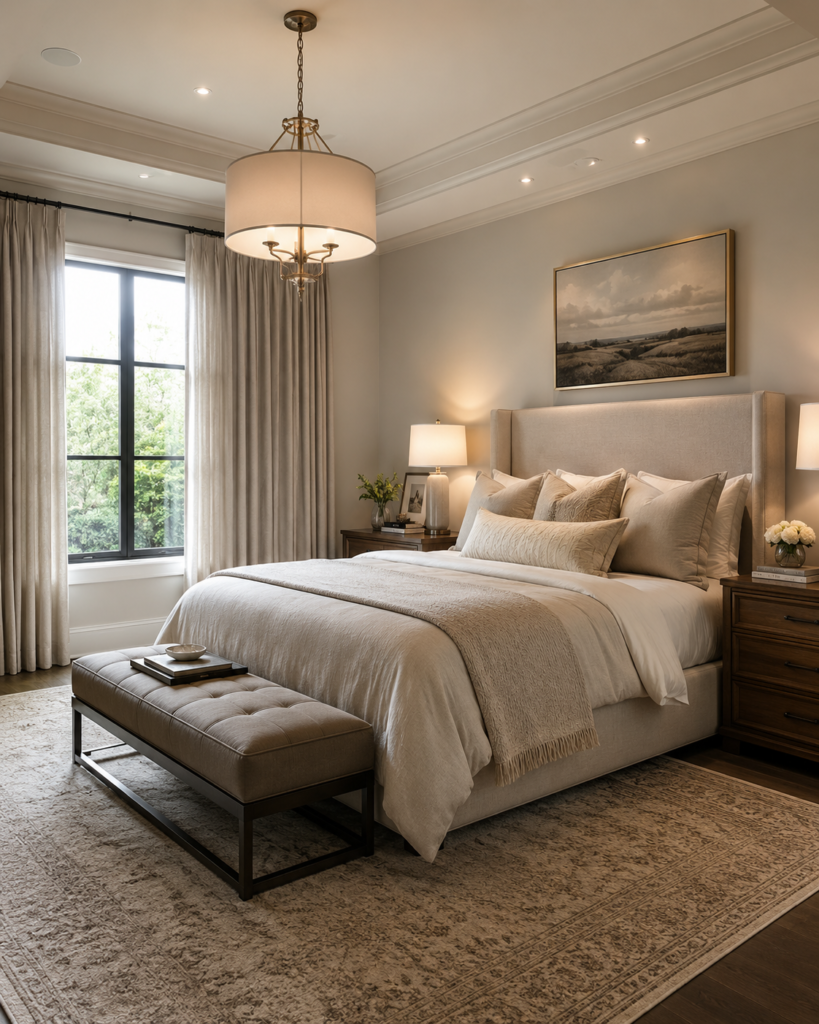
Even small details can change the feeling.
A fabric lampshade creates a softer glow than a bare bulb. A woven basket feels more natural than a plastic container. Linen, cotton, wool, and washed fabrics tend to look comfortable without appearing overly formal.
You do not need to fill the bedroom with every texture you can find.
Choose a few materials and repeat them. Perhaps the wood tone from the nightstands appears again in a bench. The color of the curtains may return in the bedding. A woven basket may connect with the texture of the rug.
That quiet repetition helps the room feel complete.
Give Ordinary Clutter Somewhere to Go
A peaceful bedroom does not require perfect habits. It requires simple places for everyday things.
If you tend to leave clothing on a chair, place a hamper or basket nearby. If extra blankets collect at the foot of the bed, store them in a bench or large basket. If jewelry, watches, and pocket items end up across the dresser, give them a small tray.
Good design should make the easy choice the neat choice.
If putting something away requires walking to another room, opening three doors, and moving a stack of boxes, it probably will not happen every night.
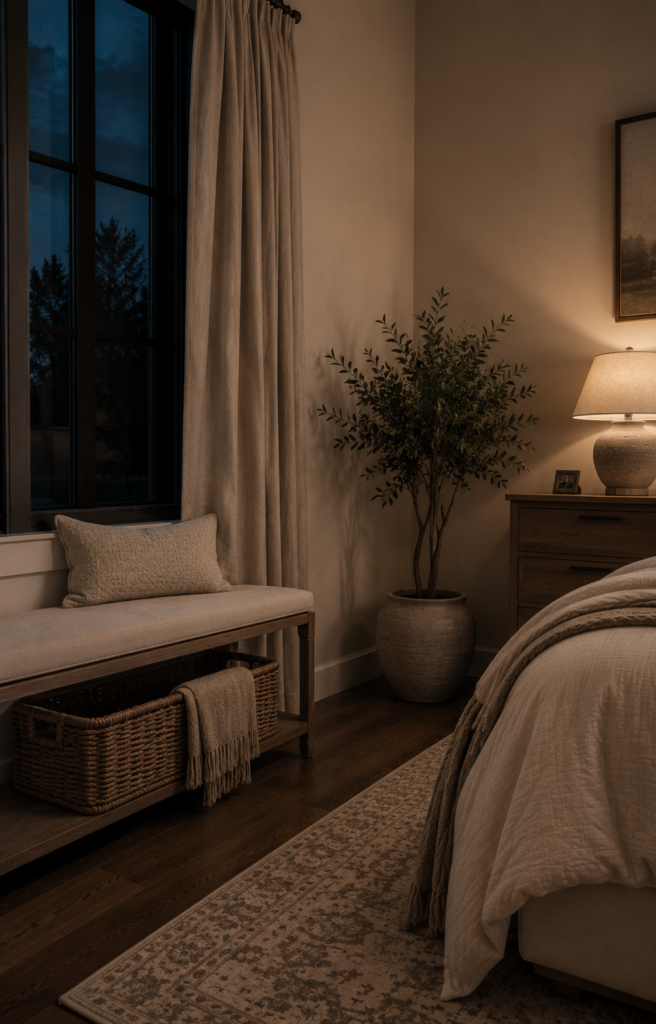
Pay attention to where clutter naturally gathers. That is often where the solution should go.
The goal is not to hide every sign of daily life. It is to make the bedroom easier to reset in a few minutes.
A room feels much calmer when nothing seems to be waiting for you to deal with it.
Make Comfort More Important Than the Photograph
I have toured bedrooms that looked incredible on camera but did not seem especially easy to use.
The bed was too tall. The nightstands were too far away. The lamps looked beautiful but gave off almost no useful light. The chair in the corner was impressive, but nobody would actually choose to sit in it.
A bedroom should work for the people sleeping there.
Think about the temperature, the morning light, the sounds outside, and how you move through the space at night.
Would heavier curtains help block the light? Would a fan make the room more comfortable? Is the path from the bed to the bathroom clear? Are the pillows actually comfortable, or do they simply look nice?
These practical details may not be the first things people notice in a photograph, but they often make the biggest difference in everyday life.
There is no single perfect bedroom. Some people need a room that is cool and dark. Others prefer a little light and the steady sound of a fan.
Calm begins with understanding what helps you rest.
Bring in a Small Connection to Nature
Many peaceful bedrooms include at least one natural element.
It might be a wooden nightstand, a simple branch in a vase, a woven basket, a stone lamp base, or a view of the trees outside.
You do not need to turn the room into a forest or follow a nature theme.
Natural materials have small changes in color, grain, and texture. They keep the room interesting without making it feel busy.
The windows can also become part of the room’s daily rhythm.
Open the curtains in the morning and let natural light enter. Close them in the evening and allow the bedroom to feel more private and protected.
It is a small routine, but it helps the room move from daytime to nighttime.
The space wakes up with you, and later, it settles down with you.
Pay Attention to What You See From Bed
Most people arrange a bedroom based on how it looks from the doorway.
It is just as important to notice what you see while lying in bed.
Are you facing a crowded dresser? An open closet? A television with a bright standby light? A chair covered in clothing?
You do not need a perfect view. You just need a quieter one.
Close the closet door. Move the laundry basket out of sight. Clear one surface. Hang a piece of art where your eyes naturally land. Tuck away visible cords when possible.
If the bed faces an open bathroom, dim the bathroom lighting and keep the counters reasonably clear. In a large master suite, every connected area should support the same calm mood.
One busy corner can make the entire room feel unsettled, especially when it is the last thing you see at night.
Create a Five-Minute Evening Reset
You do not need to clean the entire bedroom every evening.
A short reset is usually enough.
Put clothing in the hamper. Clear the nightstand. Close the curtains. Straighten the bedding. Lower the lights. Place tomorrow’s clothes somewhere neat if that makes the morning easier.
This should not feel like another chore added to your day.
It is simply a way to remove a few distractions before you rest.
The routine can become part of the calming atmosphere itself. The same lamps come on. The same curtains close. The same familiar fragrance may fill the room. Your phone gets placed on the charger, and the house begins to feel quieter.
After a while, those small actions send a clear message: nothing else needs your attention tonight.
That is something many beautiful homes get right. They make ordinary routines feel easier.
Why Calmer Bedrooms Feel So Good
The most restful bedrooms tend to share a few qualities.
They Have a Clear Focal Point
The bed is usually the main feature, and the rest of the room supports it rather than competing with it.
They Use Gentle Evening Light
Several smaller lamps create a softer atmosphere than one strong overhead light.
They Leave Some Open Space
Not every wall, dresser, shelf, and corner needs to be filled. A little restraint gives the room room to breathe.
They Make Comfort Easy
The bedding feels good. The temperature works. The nightstand is within reach. The room supports the person using it.
They Control Clutter in Practical Ways
Baskets, drawers, trays, and hampers make it simple to put ordinary items away.
They Create a Consistent Evening Mood
The lighting, textures, colors, sounds, routines, and fragrance all work together to signal that the day is ending.
Borrow the Feeling, Not the Entire Room
You may love a master suite with tall windows, custom beams, a fireplace, a sitting room, and a bathroom that looks like a private spa.
There is nothing wrong with enjoying those rooms. I tour them because they are interesting, inspiring, and filled with ideas.
But the feeling behind a beautiful bedroom is not limited to one price, location, or amount of square footage.
A small bedroom can feel peaceful. An older bedroom can feel special. A room with furniture you have owned for years can still become a place you look forward to entering.
You do not need to copy the entire space.
Borrow the softer lighting. Borrow the simple bed. Borrow the clear nightstand, the closed curtains, the natural texture, or the short evening routine.
Choose one change that would make tonight feel a little calmer.
The best bedrooms are not always the ones that impress us most. They are the ones that help us exhale.
The Secret Ingredient to the Perfect Home
The bedrooms I remember most are the ones that seem to understand exactly what they are meant to do.
They help the day grow quiet.
The lighting becomes softer. The bedding looks comfortable. The surfaces are clear. A familiar fragrance settles into the room, and everything begins to feel a little farther away.
Flannel & Wick Home Fragrances were created to bring warmth, comfort, character, and atmosphere into the home you already have. The collection includes scents inspired by cozy kitchens, quiet mornings, fireside evenings, seasonal memories, and beautiful homes.
You might begin with Always Flannel Season, the signature fragrance from Flannel & Wick, or choose another fragrance from the collection that feels more personal to you.
You do not need to recreate the exact room you admired. You can bring home the calm, comfort, and atmosphere that made you stop and notice it.


