

Luxury homes are full of features that look impressive during a tour.
Wine walls. Glass elevators. Indoor basketball courts. Show garages. Temperature-controlled rooms designed specifically for storing handbags.
They are fun to look at, but that does not necessarily mean they are worth paying for in your own home.
After walking through hundreds of custom and luxury homes, I have noticed that the best upgrades are usually not the ones that get the biggest reaction on camera. The features homeowners appreciate most are often the ones that quietly make everyday life easier.
They save steps. They reduce clutter. They make entertaining less stressful. They help the house function better without constantly reminding you how much money you spent.
That is what real luxury should do.
It should not only make your home look expensive. It should make your home easier and more enjoyable to live in.
Here are 13 luxury home features that I believe are actually worth the money.
1. A Scullery With Direct Access From the Garage
A large hidden pantry or scullery has become one of the most requested features in custom homes, but the location matters just as much as the size.
The best versions have direct access from the garage.
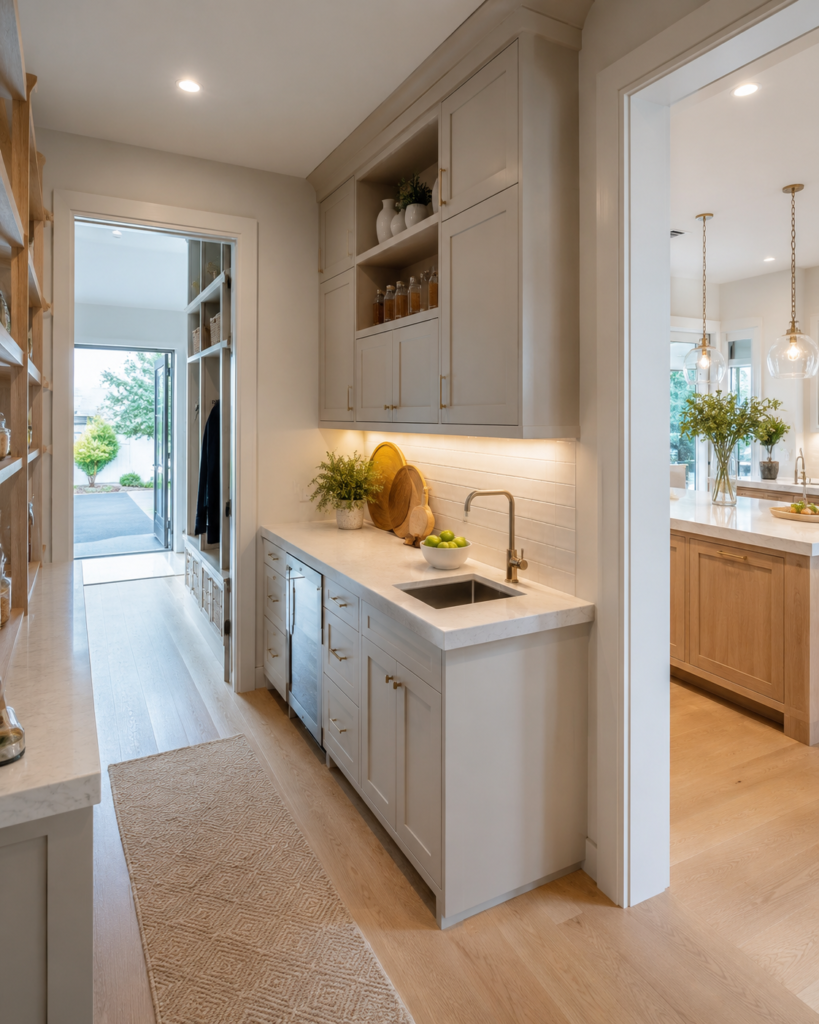
You pull into the garage, open a door, and immediately place groceries inside the pantry or scullery. You do not have to carry everything through the mudroom, down a hallway, and across the main kitchen.
Some homes take this idea even further by adding what people often call a Costco door. This is a smaller pass-through door between the garage and pantry that allows you to slide groceries, cases of water, paper towels, and other bulk items directly inside.
It may not sound glamorous, but it is one of the most practical features you can add to a home.
A well-designed scullery can also hold small appliances, food storage, an additional refrigerator, a prep sink, a dishwasher, and all the mess you do not want sitting in the main kitchen.
The main kitchen stays clean, while the working part of the kitchen stays hidden.
That is luxury you will appreciate every week.
2. A Wall Switch for the Gas Fireplace
I cannot tell you how many beautiful homes have a gas fireplace controlled by a small remote that eventually disappears into a couch cushion.
The fireplace may look amazing, but no one can turn it on because nobody knows where the remote is.
Give me a simple wall switch.
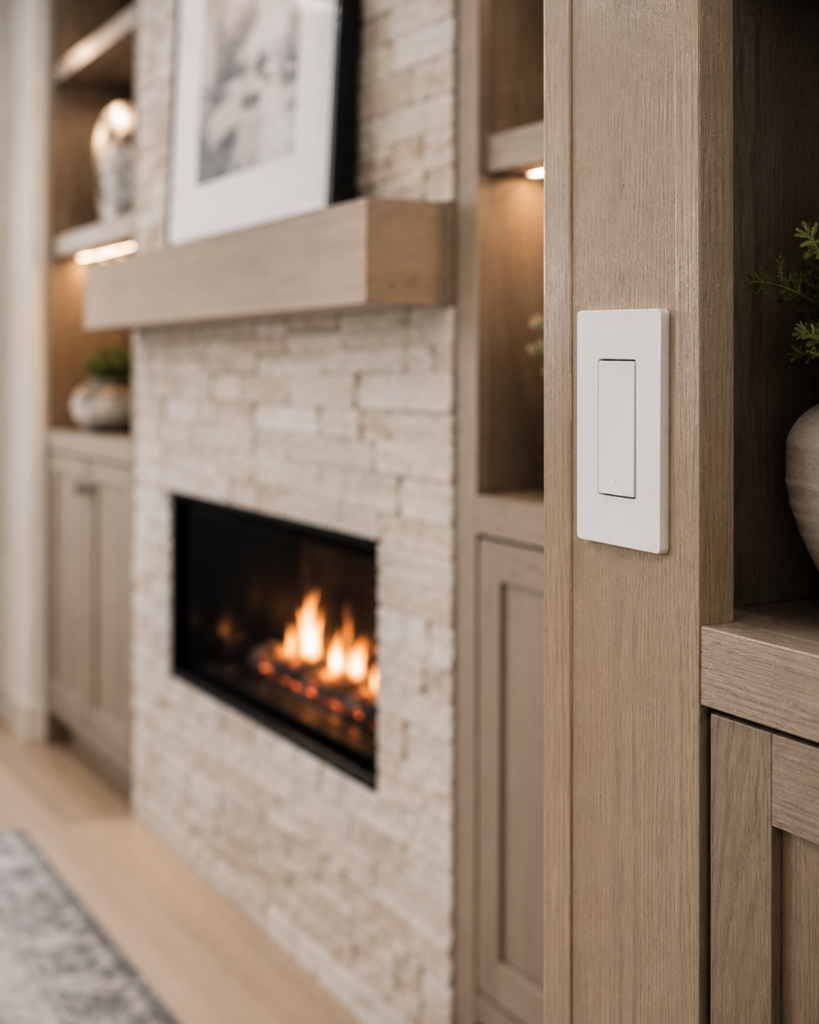
You walk into the room, flip the switch, and the fireplace comes on. There is no app to open, no remote to charge, and no instruction manual to find.
A remote can still be useful for adjusting flame height or temperature, but the fireplace should also have a physical control that anyone can understand.
Guests can use it. Kids can understand it. You do not have to explain it every time someone visits.
Sometimes the simplest solution is the most luxurious one.
3. Motorized Screens on a Covered Back Patio
A covered back patio can become one of the most used spaces in the house, especially when it feels like a true outdoor living room.
Motorized screens make that space significantly more comfortable.
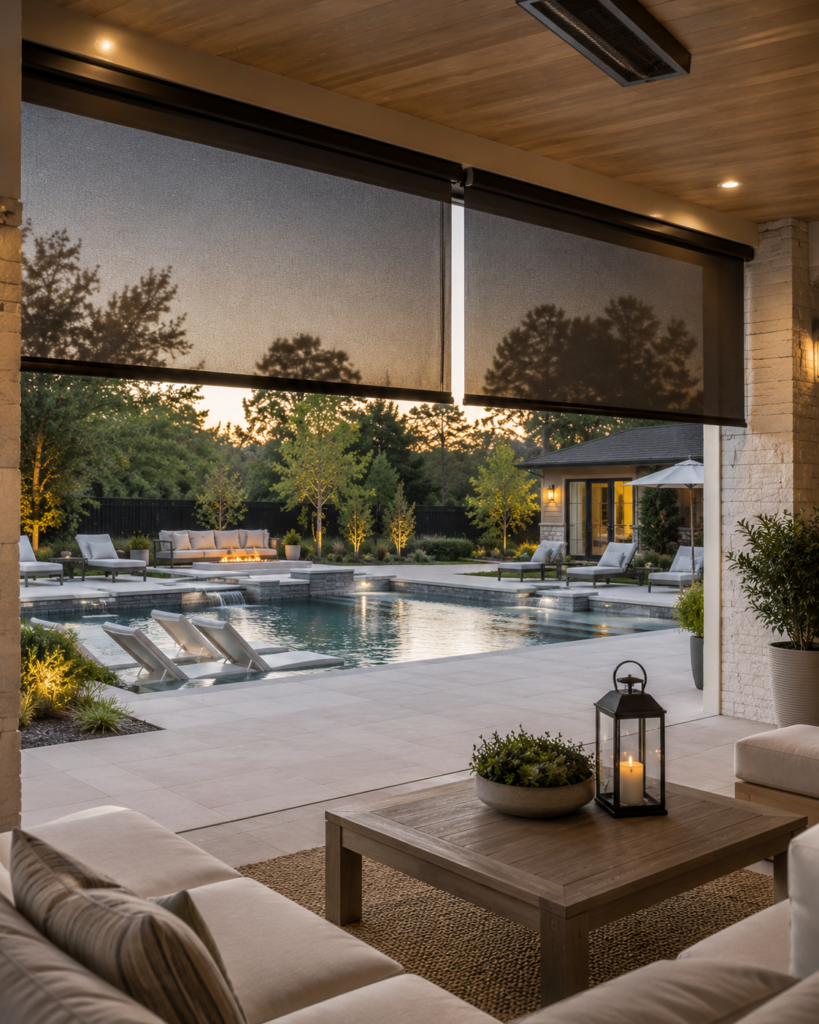
With the push of a button, the screens come down and help keep mosquitoes, flies, leaves, and other unwanted guests outside. When you want the porch completely open again, the screens disappear back into the structure.
This allows you to enjoy the patio for more months of the year without permanently enclosing it.
Add a fireplace, comfortable seating, a television, and a few ceiling heaters, and the back patio starts functioning like another room.
The motorized screens are not the most exciting feature to look at when they are rolled up, but they can completely change how often you use the space.
A covered patio is nice.
A covered patio you can comfortably use without being eaten alive by bugs is much better.
4. A Café Window From the Kitchen to the Patio
A café window is one of those features that immediately makes a house feel more fun.
It is usually installed above a kitchen counter or sink and opens directly to the covered patio. Some lift upward, some slide to the side, and others fold completely out of the way.
Once open, the kitchen counter becomes a serving bar for the patio.
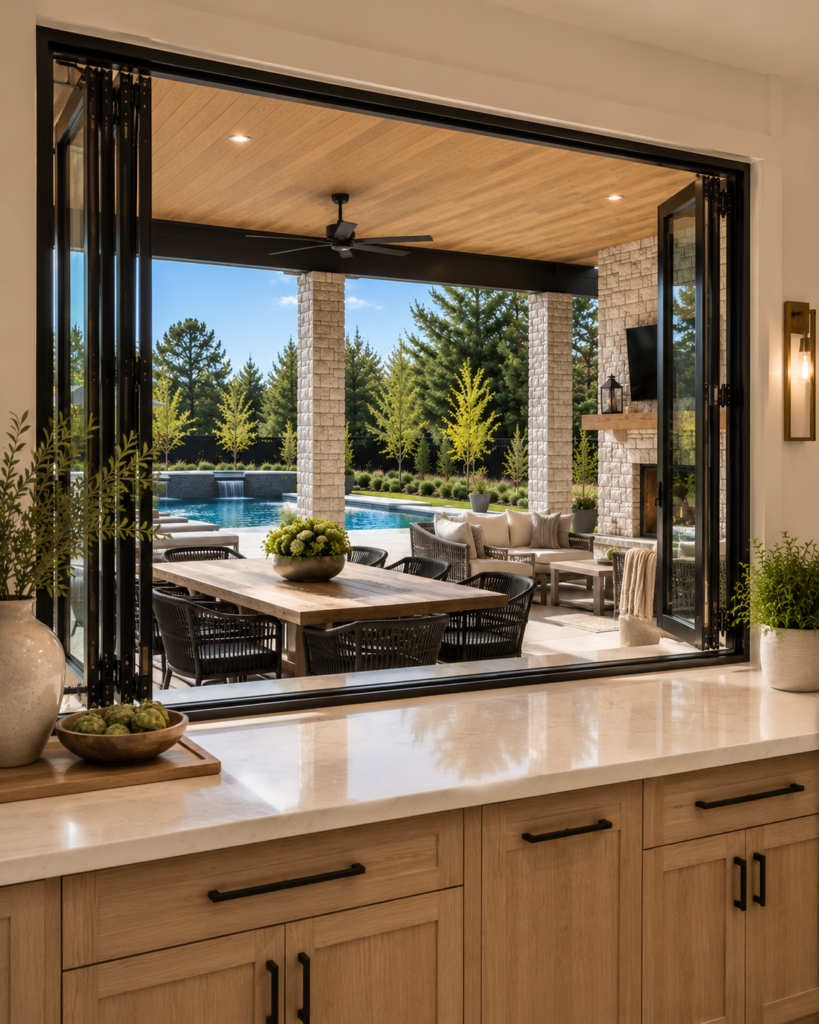
You can pass drinks, food, plates, and snacks outside without carrying everything through a doorway. Guests can sit at stools on the patio side while still talking to whoever is inside the kitchen.
It works especially well when entertaining, but it is also useful for normal family life.
Kids can eat lunch outside. Someone can refill a drink without walking through the entire house. Food can move directly from the kitchen to the grill or outdoor dining table.
It creates a stronger connection between the kitchen and outdoor living area without requiring the entire wall to open.
5. Double Kitchen Islands
Double kitchen islands can be unnecessary in a smaller kitchen, but when the room is large enough and the layout is planned correctly, they can work extremely well.
The key is giving each island a clear purpose.
One island can be used for cooking and preparation. It might include the sink, dishwasher, trash pullout, and plenty of uninterrupted workspace.
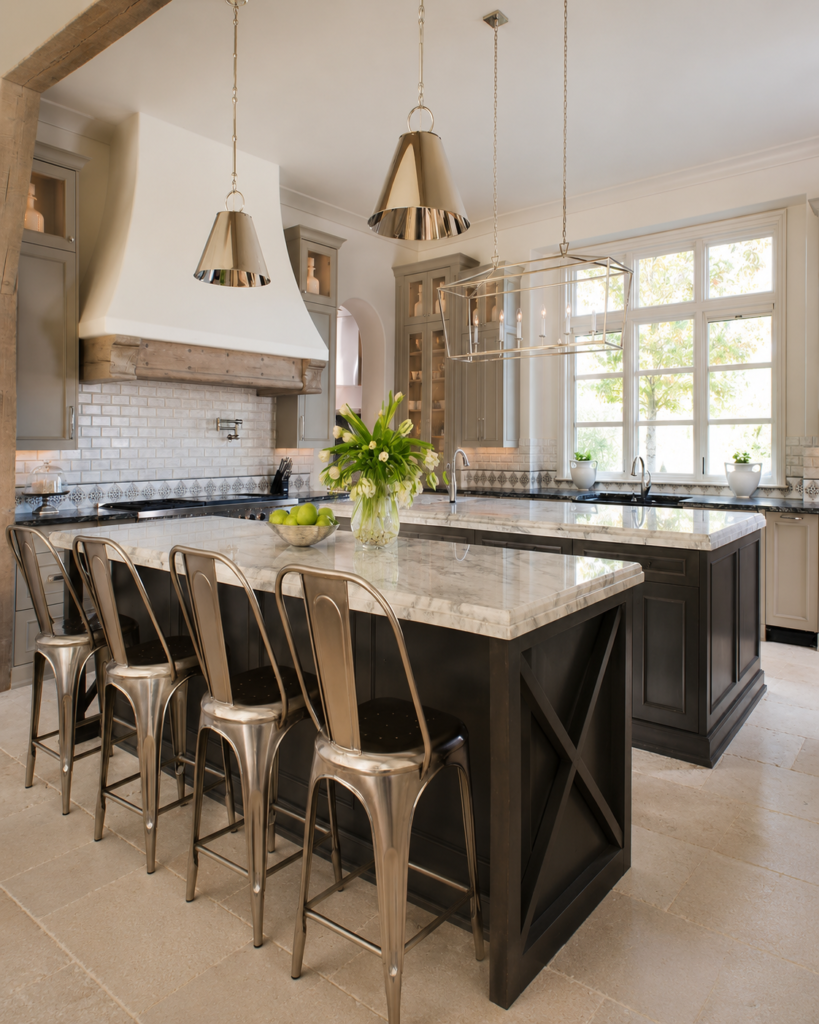
The second island can be used for seating, serving, homework, or entertaining.
This keeps guests and family members from gathering directly in the middle of the cooking area.
Instead of everyone sitting around the same island where you are trying to prepare dinner, the second island creates a separate place to talk, eat, and spend time together.
The mistake is adding two islands simply because the kitchen is large.
If the islands interrupt the natural walking path or leave narrow spaces between them, the kitchen will feel crowded instead of luxurious.
But when they are sized and positioned correctly, double islands can make a large kitchen much easier to use.
6. Under-Cabinet Electrical Outlets
Electrical outlets are necessary, but they do not always need to be the first thing you see on a beautiful kitchen backsplash.
Under-cabinet outlet strips allow you to keep outlets hidden beneath the upper cabinets.
You still have power where you need it, but the backsplash remains clean and uninterrupted.
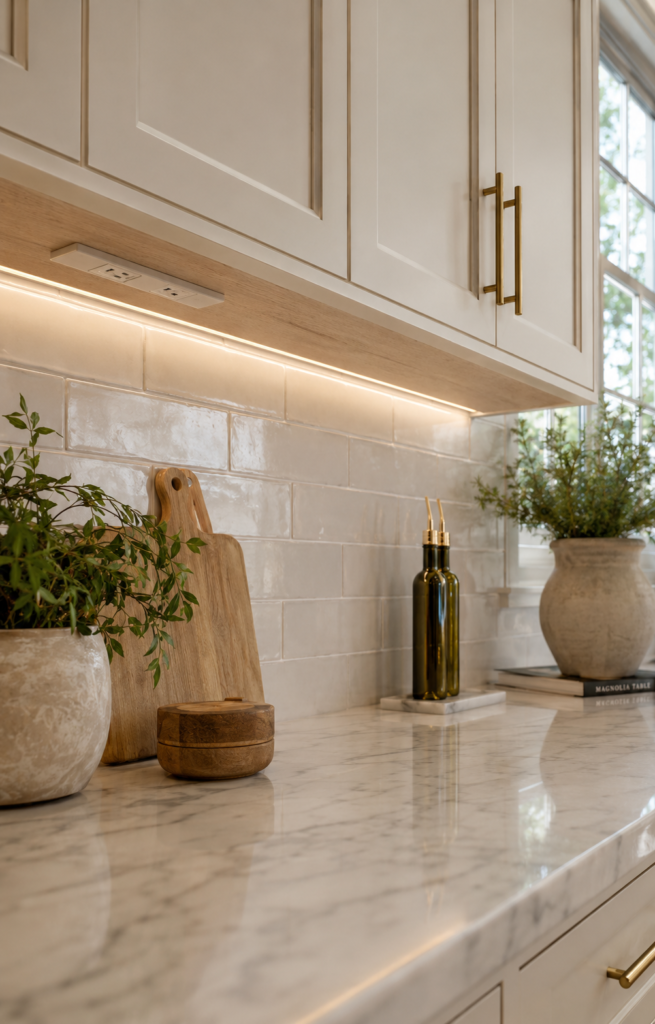
This is especially valuable when you are using a natural stone slab, handmade tile, or another backsplash material you do not want broken up by rows of plastic outlet covers.
Under-cabinet power can also include USB ports, lighting controls, and switches for appliances.
The same approach can be used on the side or underside of an island so outlets do not interrupt the cabinetry.
This is a relatively small detail, but it makes a major visual difference.
The kitchen feels cleaner because the things you need are there without becoming part of the design.
7. A Dedicated Beverage or Coffee Station
A separate beverage station may sound like a luxury, but it can dramatically improve the way a kitchen functions.
Instead of everyone walking through the main cooking area to get coffee, water, or a drink from the refrigerator, the beverage station gives them their own space.
It can include a coffee maker, an under-counter refrigerator, a wine refrigerator, an ice maker, a sink, glassware storage, and a cabinet for mugs and supplies.
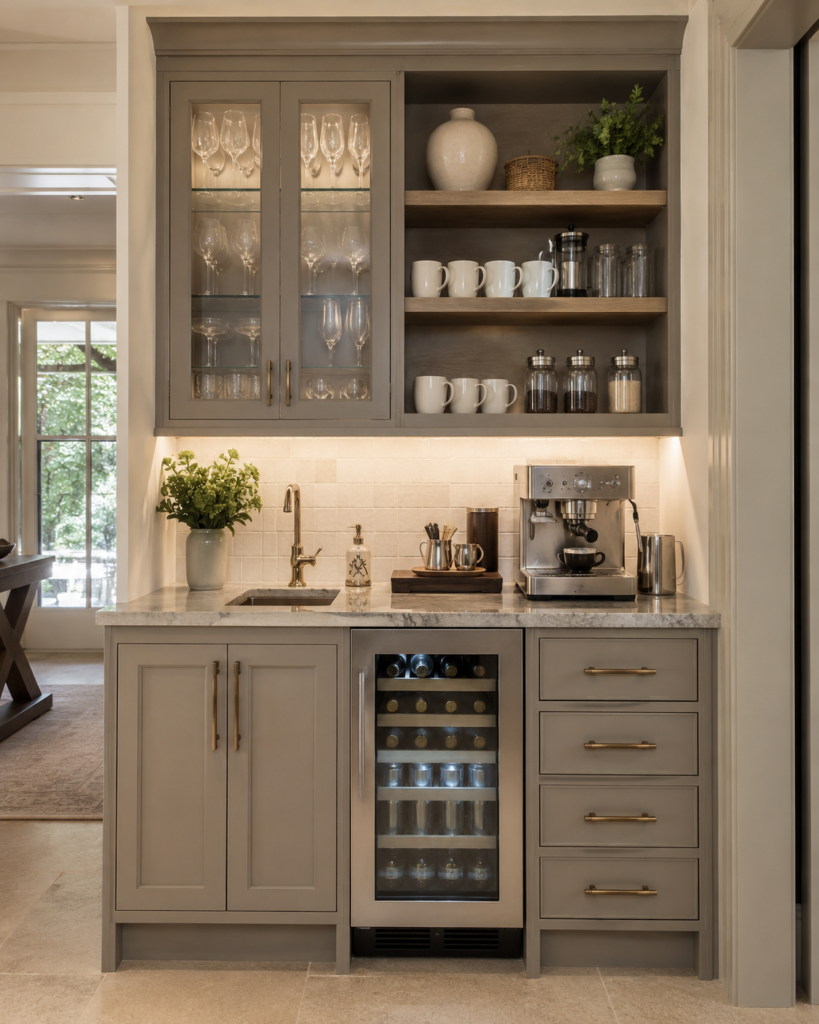
The station might be located along the edge of the kitchen, near the dining room, or between the kitchen and great room.
During the morning, it becomes the coffee area.
During a party, it becomes the drink station.
The main kitchen remains available for cooking instead of becoming crowded with people looking for cups, ice, and bottled water.
Even a smaller version can be worthwhile. You do not need a full bar with expensive appliances. A dedicated cabinet, counter, and beverage refrigerator can accomplish the same goal.
8. Heated Bathroom Floors
Heated bathroom floors are one of those upgrades that may feel unnecessary until you live with them.
Then it becomes difficult to imagine building another bathroom without them.
Tile is durable, beautiful, and easy to clean, but it can also feel extremely cold, especially during winter.
Radiant floor heating warms the tile from underneath, making the entire bathroom feel more comfortable.
It is particularly valuable in the master bathroom, where you may be walking barefoot early in the morning or late at night.
The system can usually be placed on a timer so the floor begins warming before you wake up.
This is not a feature visitors will immediately notice. It does not create a dramatic photograph. It simply makes the room feel better every day.
That is exactly why it is worth considering.
9. Whole-Home Water Filtration and Hot-Water Recirculation
Water is something you use throughout the house every single day, which makes water-related upgrades some of the most practical investments you can make.
A whole-home water filtration system can improve the taste and smell of the water while reducing sediment, chlorine, and other unwanted materials, depending on the system you choose.
Instead of filtering water at only one kitchen faucet, the system treats water throughout the home.
A hot-water recirculation system solves a different problem.
In a large house, it can take a long time for hot water to reach a bathroom or sink located far from the water heater. During that time, clean water is running down the drain while you wait.
A recirculation system keeps hot water moving through the plumbing so it reaches the faucet much faster.
You turn on the shower, and the water warms almost immediately.
It saves time, reduces waste, and makes the entire house feel more convenient.
10. A True Mudroom With Built-In Storage
A mudroom should be more than a narrow hallway between the garage and kitchen.
A properly designed mudroom gives everything a place before it enters the rest of the house.
Built-in lockers can hold jackets, backpacks, purses, hats, and shoes. Drawers can store pet supplies, gloves, sports equipment, and other smaller items.
A bench gives you a place to sit while putting on shoes. Durable flooring makes dirt and water easier to manage.
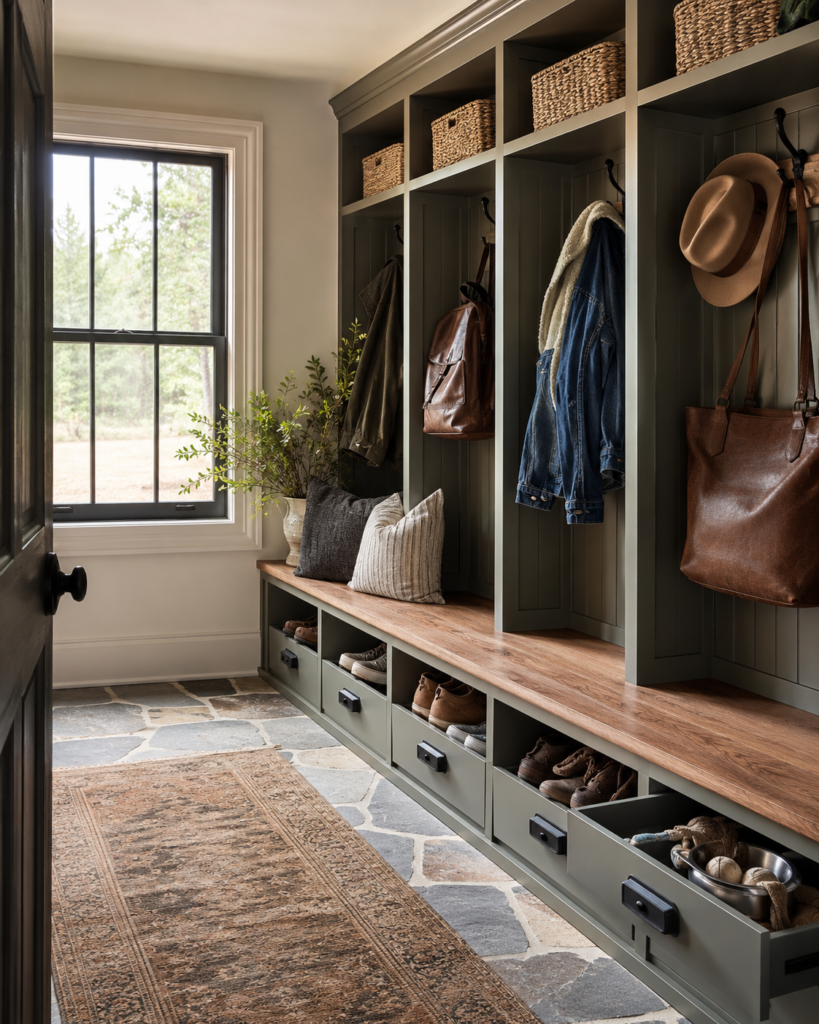
Some mudrooms also include a dog-washing station, utility sink, charging drawer, or small closet for cleaning supplies.
The most important part is planning the storage around the people who actually live in the house.
A family with children may need individual lockers and backpack hooks. Someone living on a farm may need space for boots, coats, and work clothes. A household with dogs may need room for leashes, towels, and food storage.
A thoughtful mudroom prevents the kitchen counter, dining table, and entryway from becoming the drop zone for everything.
11. A Laundry Room Connected to the Master Closet
A laundry room connected directly to the master closet is one of the smartest layout decisions I see in custom homes.
Think about the normal laundry process.
Clothes leave the closet, travel to the laundry room, get washed and dried, and then travel back to the same closet.
Connecting the two spaces removes several unnecessary steps.
Dirty clothes can go directly from the closet into the laundry room. Clean clothes can be folded or hung and immediately returned to the closet.
Some homes include a door directly between the two rooms. Others use a small laundry pass-through built into the cabinetry.
The layout works even better when the laundry room is also accessible from a hallway so the rest of the household does not need to walk through the master suite.
This is the kind of feature that may not add much visual drama, but it can make a repetitive household chore noticeably easier.
12. Smart Home Lighting
Smart home lighting is one of the few technology upgrades that can improve both convenience and atmosphere.
You can control lights individually, by room, or throughout the entire home.
Instead of walking from room to room turning everything off before bed, you can press one button or use your phone.
You can also create lighting scenes for different parts of the day.
A morning setting might bring up the kitchen and hallway lights gradually. An entertaining setting might dim the great room lights while leaving the kitchen and dining areas brighter. A movie setting could lower the lights around the television while keeping subtle path lighting on.
You can also program exterior lights to come on at sunset and turn off at a certain time.
The most important part is making sure the system remains simple.
You should still have normal wall switches. Guests should be able to turn on a light without downloading an app or asking how the house works.
The technology should add convenience, not create confusion.
When it is designed correctly, smart lighting lets you change the mood of the entire home with one touch.
13. Oversized Sliding or Pocket Glass Doors
Large glass doors can completely change the relationship between the indoor and outdoor spaces.
When closed, they bring more natural light into the house and provide a wide view of the patio or backyard.
When opened, they allow the great room, kitchen, or dining area to flow directly into the covered patio.
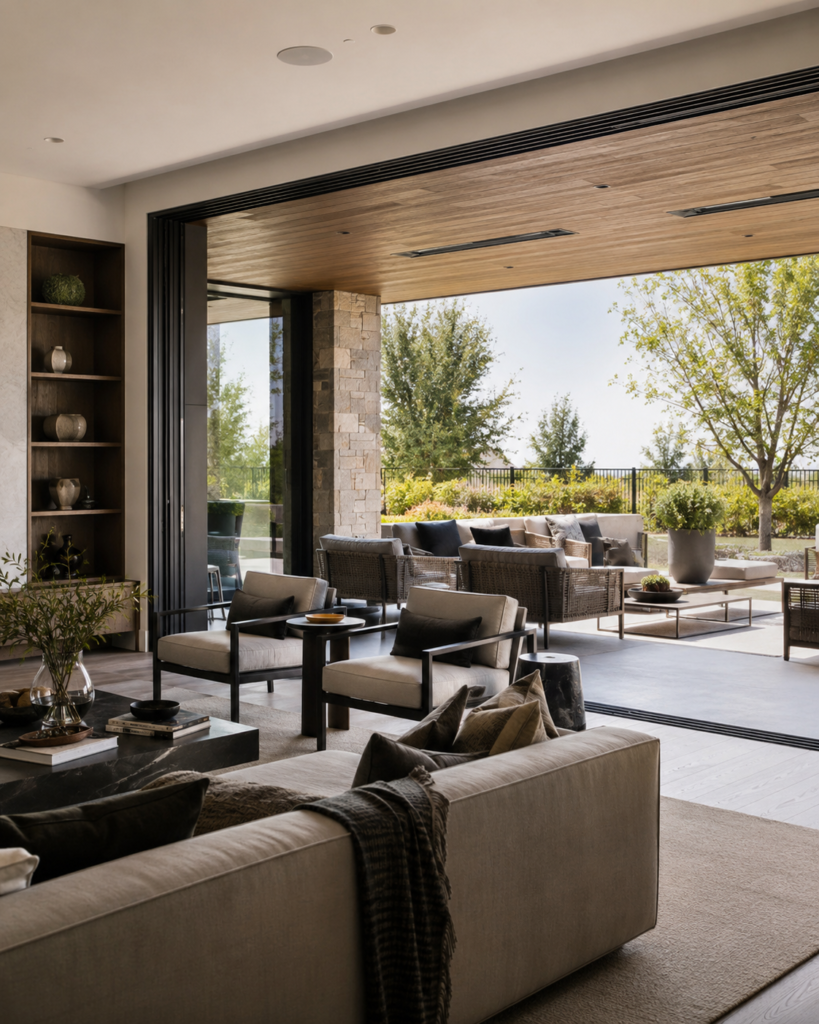
Pocketing systems are especially impressive because the panels slide into the wall and almost completely disappear. Folding systems can open most of the wall while stacking the panels to one side.
This makes the indoor and outdoor entertaining areas feel like one large space.
However, the doors need to be planned carefully.
You need to think about drainage, thresholds, screens, climate, furniture placement, and how often the doors will realistically remain open.
In some climates, a simpler multi-panel sliding door may provide most of the benefit without the cost and complexity of a fully pocketing system.
The goal is not to install the largest door possible.
The goal is to create an opening you will actually use.
The Best Luxury Features Make Life Easier
The luxury upgrades that are worth paying for usually have something in common.
They solve a real problem.
They make groceries easier to unload. They reduce clutter in the kitchen. They make the patio more comfortable. They shorten the laundry process. They help the house feel warmer, quieter, and easier to control.
These features may not be as dramatic as a bowling alley or a glass wine cellar, but you will probably use them far more often.
That is what I would focus on when building a custom home.
Do not ask only whether a feature looks impressive.
Ask how often you will use it, what problem it solves, and whether it makes the home easier to live in.
A well-designed home does not need every available upgrade.
It needs the right upgrades in the right places.
Luxury Doesn’t End With the Floor Plan
One thing I’ve learned from touring hundreds of beautiful homes is that luxury isn’t just about expensive finishes or custom features. It’s about how a home makes you feel.
The best homes feel calm. Comfortable. Welcoming. They make everyday life just a little easier, whether that’s unloading groceries into a well-designed pantry or relaxing by the fireplace after a long day.
The good news is you don’t have to build a multi-million-dollar custom home to create that feeling.
Many of the little details that make luxury homes so memorable can be recreated in the home you already have.
If you’re looking for simple, practical ideas you can do today, check out my article, 15 Ways to Make Your Home Feel More Luxurious By Tonight. It covers easy changes that can make your home feel warmer, more inviting, and more like the homes we tour—without starting a remodel.


