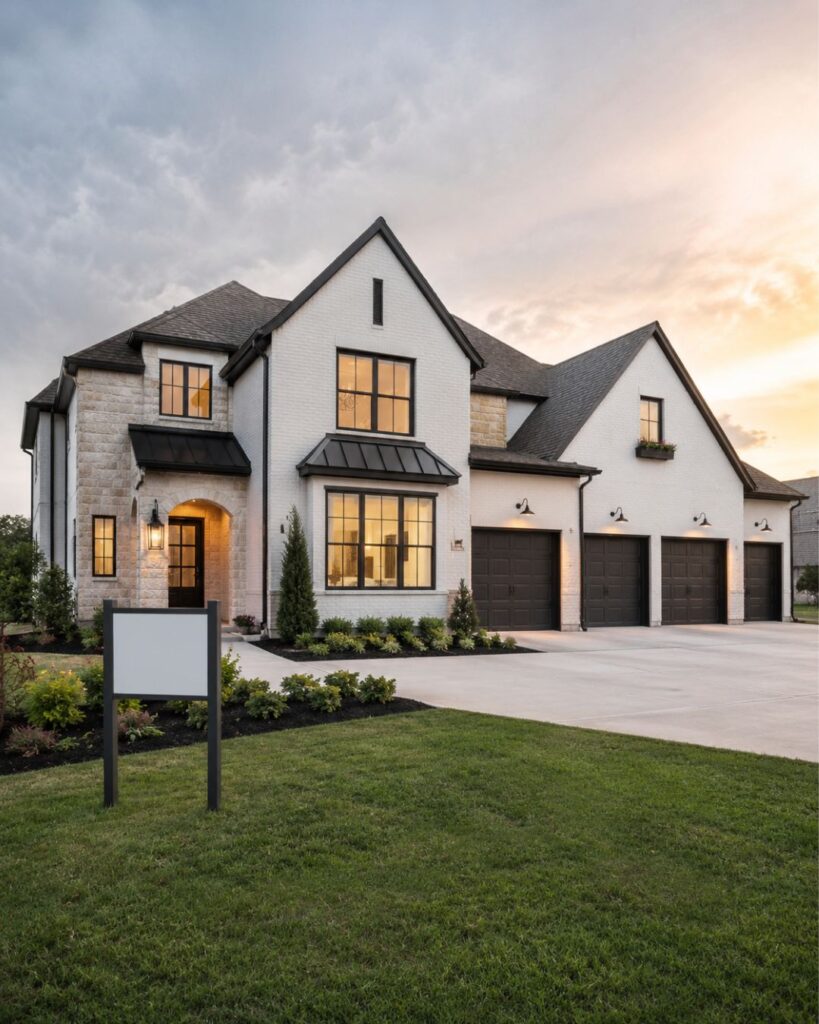

Builders are lowering prices, buying down mortgage rates and offering thousands of dollars in incentives. But before assuming a brand-new home is automatically the better deal, buyers need to look beyond the advertised price.
Last updated: July 19, 2026
For the past several years, buyers interested in new construction have been told to expect premium pricing, expensive upgrades and very little room to negotiate.
That is beginning to change.
Builders are facing a growing number of completed homes, affordability concerns and buyers who remain hesitant to commit at today’s mortgage rates. Unlike an individual homeowner, a builder cannot always afford to let a finished house sit indefinitely. Carrying costs, construction loans and upcoming phases create pressure to keep homes moving.
In July 2026, 37% of builders reported cutting home prices, up from 32% in May. The average reduction was approximately 6%. At the same time, 63% of builders were using some form of sales incentive, marking the 16th consecutive month in which at least 60% offered incentives.
Those incentives may include:
- Mortgage-rate buydowns
- Closing-cost assistance
- Design-center credits
- Appliance packages
- Reduced lot premiums
- Finished basements
- Landscaping allowances
- Complimentary upgrades
- Lower purchase prices
Does that mean a new construction home is now a better deal than an existing home?
In some markets and communities, it absolutely can be. But the answer depends on the total cost of ownership, not simply the number printed on the builder’s website.
Why Builders Are Becoming More Willing to Negotiate
Builders are not cutting prices because new homes have suddenly become inexpensive to construct. Land, materials, labor and financing remain costly.
They are negotiating because buyers have become extremely sensitive to monthly payments.
The average 30-year fixed mortgage rate reached 6.55% on July 16, 2026, according to Freddie Mac. Even relatively small movements in mortgage rates can noticeably affect a buyer’s payment and purchasing power.
Demand has also been uneven. Pending sales of existing homes fell 5.4% in June, with month-over-month declines reported in every major region of the country.
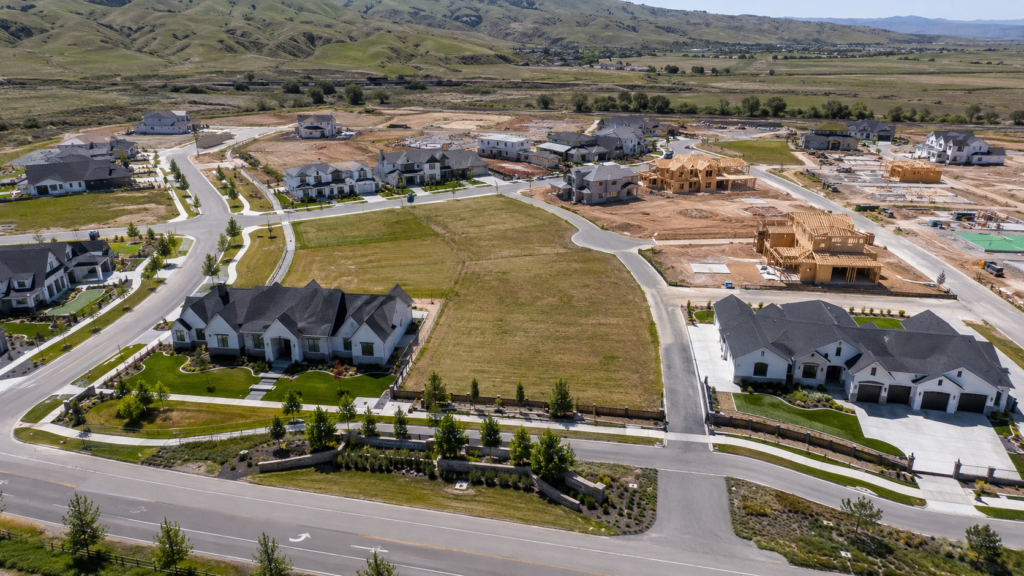
Meanwhile, the number of newly built homes available for sale remains elevated. At the end of May, approximately 496,000 new homes were on the market. At the current pace of sales, that represented 10.3 months of supply.
That creates a very different negotiating environment from a market in which buyers are competing for a limited number of homes.
A completed spec home costs a builder money every month it remains unsold. The lawn must be maintained, utilities remain active, property taxes continue and capital stays tied up in a house that is not producing revenue.
For a qualified buyer who is prepared to close, that can create leverage.
Are New Homes Really Cheaper Than Existing Homes?
National median prices suggest that the difference may be smaller than many buyers assume.
The median price of a newly built home sold in May 2026 was $424,900. The median price of an existing home sold in June was $440,600.
That is a difference of approximately $15,700, with the national new-home median coming in about 3.6% lower.
However, this is not a perfect apples-to-apples comparison.
The numbers cover different months, different locations and different mixes of homes. Existing-home data includes single-family houses, townhomes, condominiums and co-ops, while the Census Bureau’s new-home report covers newly built single-family homes. New construction is also concentrated more heavily in certain regions and suburban markets.
Still, the figures challenge the long-standing assumption that a new home must always cost considerably more than an existing one.
In some communities, the base price of a new home may now compete directly with nearby resale properties. When builder financing, closing assistance and warranties are included, the new home can sometimes produce the better overall package.
But buyers must compare what each price actually includes.
1. Compare the Real Purchase Price—not Just the Advertised Price
A builder may advertise a home at $499,000 while quietly offering $25,000 toward financing or closing costs.
An existing home may be listed at the same price but ultimately sell for less after an inspection or appraisal negotiation.
Ask the builder for a written breakdown showing:
- Base purchase price
- Lot premium
- Structural options
- Design upgrades
- Incentives
- Closing credits
- Required lender fees
- HOA initiation fees
- Estimated property taxes
The number that matters is the final amount required to purchase and finance the completed home.
A 6% reduction on a $450,000 home would equal $27,000. That is substantial, but buyers should confirm whether the reduction applies to the actual price, is being advertised as an incentive package or requires the use of an affiliated lender.
2. Look Closely at the Builder’s Mortgage Incentive
Mortgage incentives are currently one of the largest potential advantages of purchasing from a major builder.
A builder may use its own money—or an affiliated mortgage company—to offer a rate lower than what a buyer could obtain independently.
That lower rate may be:
- A permanent rate buydown
- A temporary 3-2-1 buydown
- A temporary 2-1 buydown
- A fixed promotional rate
- A lender credit used to reduce closing expenses
These offers are not interchangeable.
A permanent rate buydown reduces the interest rate for the full term of the mortgage. A temporary buydown lowers the payment only during the first few years before it increases to the full note rate.
Consider a hypothetical buyer borrowing $360,000 on a 30-year mortgage.
At 6.55%, the principal-and-interest payment would be approximately $2,287 per month. At 5.55%, the payment would be approximately $2,055 per month—a difference of about $232 each month before taxes, insurance and other expenses.
That is nearly $2,800 during the first year alone.
However, buyers should not rely on the advertised rate without reviewing the complete loan estimate. Confirm:
- Whether the rate is permanent or temporary
- The annual percentage rate, or APR
- The number of points being charged
- Required down payment
- Credit-score requirements
- Origination fees
- Whether the incentive increases the home’s purchase price
- Whether refinancing or early payoff affects the incentive
- Whether the buyer must use the builder’s lender
Always compare the builder’s offer with at least one independent lender.

3. Closing-Cost Credits Can Preserve Your Cash
Closing expenses can require buyers to bring thousands of additional dollars to the table beyond their down payment.
A builder may offer to cover some or all of the buyer’s eligible closing costs. Depending on the loan and offer, that credit could be applied toward expenses such as:
- Loan origination charges
- Discount points
- Title expenses
- Appraisal fees
- Prepaid insurance
- Initial escrow deposits
- Recording fees
A closing-cost credit may be especially valuable to a buyer who wants to preserve cash for furniture, window treatments, fencing or other expenses that arrive shortly after moving into a new home.
But a credit is only valuable if the underlying mortgage remains competitive.
A builder offering $15,000 in closing assistance through a preferred lender may still be less attractive than an independent lender offering lower fees and a better long-term rate.
Compare the entire transaction—not one impressive incentive.
4. Free Design Upgrades May Not Be Worth Their Advertised Value
“$30,000 in free upgrades” sounds like an immediate win.
Sometimes it is. Other times, the builder’s retail value for those upgrades may be much higher than their actual cost or their value to you.
Design-center incentives are most useful when they cover permanent features that would be expensive or disruptive to change later.
Good places to use an upgrade credit may include:
- Better cabinetry
- Additional kitchen drawers
- Higher-quality flooring
- Improved insulation
- Larger windows
- Additional electrical outlets
- Under-cabinet lighting
- A covered patio
- Upgraded bathroom tile
- Structural changes
- Increased garage depth
- Plumbing for a future bathroom
- Prewiring for lighting, security or electric vehicles
Be more cautious about spending the entire allowance on decorative fixtures, basic appliances or highly personalized finishes that could be replaced later for less money.
Read This: 13 Luxury Home Features That Are Actually Worth the Money

5. Do Not Forget the Lot Premium
The attractive starting price shown online often applies to a home built on the community’s least expensive available lot.
A larger lot, cul-de-sac location, wooded view, walkout basement or position beside open space may carry a substantial premium.
Ask whether the lot premium is:
- Included in the advertised price
- Eligible for builder incentives
- Added before or after design upgrades
- Reflected in the appraisal
- Negotiable
- Refundable if construction does not proceed
A lower mortgage rate can be quickly offset by a $40,000 lot premium.
Pay attention to future phases as well. A home that appears to back up to open land today may eventually overlook another street, apartment building, commercial property or row of homes.
Request the full community plan rather than relying only on the view from the model home.
6. A New-Home Warranty Has Real Value—But Read It
One of the largest advantages of new construction is that most major components begin their life at the same time.
The roof, heating and cooling system, plumbing fixtures, appliances and windows should not require the same immediate replacement planning that may come with an older home.
Many builders also provide written warranty coverage. However, the length and quality of that coverage vary.
Ask for the warranty documents before signing the purchase contract and confirm:
- What is covered during the first year
- Whether mechanical systems receive longer coverage
- How structural issues are defined
- Which cosmetic items are excluded
- How warranty requests are submitted
- How quickly repairs are typically addressed
- Whether the warranty transfers to a future owner
- Which manufacturers handle appliance and equipment claims
A warranty does not replace a professional home inspection.
Even a brand-new home can have incomplete work, drainage problems, damaged materials, poorly installed fixtures or issues hidden behind finished surfaces. Consider inspections before drywall, before closing and near the end of the builder’s one-year warranty period.
7. Property Taxes Can Create a Payment Surprise
Property-tax estimates on new construction deserve extra attention.
During construction, the property may initially be assessed based primarily on the value of the land or an incomplete structure. Once the finished home is assessed, the annual tax bill may increase significantly.
That can also cause the mortgage escrow payment to rise.
Do not base your budget solely on the amount currently shown in a listing, builder worksheet or public property record.
Ask the local tax office, lender or qualified real estate professional for an estimate based on:
- The finished home
- The expected closing price
- Local tax rates
- Special taxing districts
- Available homeowner exemptions
- Upcoming community assessments
Some developments may also fall within special districts that fund roads, utilities, schools or community infrastructure. Those charges may appear on the tax bill and can remain for years.
A builder’s low advertised monthly payment may not include a fully adjusted property-tax estimate.
8. HOA and Community Fees Can Change the Comparison
New developments frequently include amenities and services that older neighborhoods do not offer.
Those might include:
- Community pools
- Clubhouses
- Fitness facilities
- Walking trails
- Gated entrances
- Private roads
- Lawn maintenance
- Snow removal
- Common landscaping
- Security
- Community events
Those features can add convenience and value, but the fees must be included in the monthly comparison.
Ask for:
- Current monthly or annual dues
- Initiation and transfer fees
- Planned increases
- Recent HOA budgets
- Reserve-fund information
- Rules concerning rentals, fences and exterior changes
- Amenity completion dates
- Any additional community or district assessments
Do not assume every amenity shown in a builder’s rendering has already been funded or guaranteed.
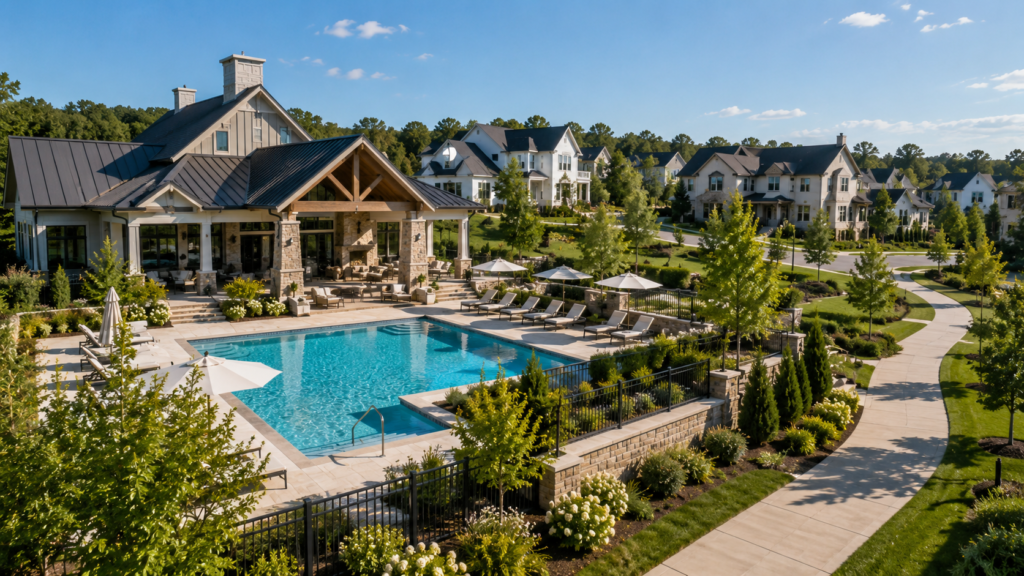
An existing home without a community pool may appear less exciting, but it may also save hundreds of dollars each month in HOA and special-district expenses.
New Construction vs. Existing Home: What Are You Actually Getting?
| Cost or Feature | New Construction | Existing Home |
|---|---|---|
| Purchase price | May include builder discounts but can rise with lot and design premiums | May be negotiable depending on competition and condition |
| Mortgage rate | Builder may offer a discounted or bought-down rate | Buyer generally obtains standard market financing |
| Closing costs | Builder may offer a credit | Seller credit may be possible but is not guaranteed |
| Upgrades | Buyer may choose finishes or receive design credits | Renovations may be needed after closing |
| Repairs | Generally fewer immediate replacements expected | Roof, HVAC, windows or appliances may be older |
| Warranty | Builder and manufacturer coverage may apply | Coverage depends on age, condition and any purchased home warranty |
| Landscaping | May be minimal or unfinished | Mature landscaping may already be established |
| Window treatments | Frequently not included | Often remain with the home |
| Lot | May be smaller or carry a premium | Older neighborhoods may offer larger lots |
| Taxes | Assessment may rise after completion | Tax history may be easier to estimate |
| HOA fees | Common in new developments | Varies widely by neighborhood |
| Neighborhood | Amenities may still be under construction | Surroundings and traffic patterns are already established |
When New Construction May Be the Better Deal
A newly built home may make more financial sense when:
- The builder is offering a permanent mortgage-rate buydown
- The home is already complete and the builder is motivated to close
- The price competes with similar existing homes nearby
- Major appliances and essential upgrades are included
- The buyer plans to remain long enough to benefit from the lower rate
- Nearby existing homes would require expensive renovations
- The builder is providing meaningful closing-cost assistance
- The warranty has strong coverage
- Property taxes and HOA fees remain manageable
- The floor plan works without expensive structural modifications
Quick move-in and completed inventory homes often provide more negotiating potential than a home that has not yet been started.
Builders may be especially motivated near the end of a month, quarter, fiscal year or community phase. That does not guarantee a discount, but it gives buyers a reason to ask.
When an Existing Home May Still Be the Better Choice
A resale home may be the stronger deal when:
- It is located in a more established neighborhood
- The lot is larger or more private
- Mature trees and landscaping are important
- The home includes fencing, blinds and appliances
- The seller is motivated
- The home has recently received major mechanical upgrades
- New construction requires substantial lot premiums
- HOA or district fees are significantly lower
- The buyer wants to avoid ongoing neighborhood construction
- The existing home offers architecture or craftsmanship that is difficult to reproduce
New does not automatically mean better, and older does not automatically mean less efficient.
The best deal is the home that provides the right combination of price, payment, location, condition and long-term operating costs.
Questions to Ask Before Accepting a Builder Incentive
Before signing, ask the builder or sales representative:
- Is the advertised mortgage rate permanent or temporary?
- What interest rate will apply after any temporary buydown expires?
- Am I required to use the builder’s lender or title company?
- What is the APR after points and lender charges?
- Can I take a lower purchase price instead of the financing incentive?
- Does the price include the lot premium?
- Which design features are included in the base price?
- Are appliances, landscaping, fencing and window coverings included?
- What will the property taxes likely be after the home is fully assessed?
- Are there special district taxes or assessments?
- What are the current HOA dues and initiation fees?
- Can HOA dues increase before all amenities are completed?
- Can I hire my own home inspector?
- What happens if the appraisal is lower than the contract price?
- Is my earnest money refundable if financing falls through?
- What warranty coverage is included?
- When will the surrounding lots and community amenities be completed?
- Can the incentives be combined, or must I choose one?
Get every promise in writing. A verbal assurance from a salesperson is not a substitute for language included in the purchase contract or addendum.
So, Is a New Construction Home the Better Deal in 2026?
For some buyers, yes.
With 37% of builders cutting prices and nearly two-thirds offering incentives, buyers have more room to negotiate than they may realize. High new-home inventory also means certain builders and communities need to compete for qualified buyers.
But the best incentive is not always the one with the largest number attached to it.
A $30,000 design credit may be less valuable than a permanent mortgage-rate reduction. A low advertised payment may be misleading if it excludes future property taxes, HOA dues or the expiration of a temporary buydown. A discounted home may stop looking inexpensive after the lot premium and essential upgrades are added.
Compare the complete financial picture:
Final purchase price + financing costs + taxes + insurance + HOA fees + immediate upgrades + expected maintenance
Then compare that result with similar existing homes in the same area.
The current market gives new construction buyers something they have not always had: leverage. Use it carefully, compare lenders and do not be afraid to negotiate beyond the advertised offer.
The beautiful model home may get your attention.
The numbers should determine whether you buy it.

This article is intended for general informational purposes and should not be considered financial, mortgage, tax or legal advice. Mortgage offers, incentives, property taxes and community fees vary by buyer, builder and location. Buyers should consult qualified professionals and review all contracts and loan documents before making a purchase.